
Best overall for hot flashes and night sweats: black cohosh. Best for sleep: magnesium glycinate. Best for stress and mood swings: ashwagandha (KSM-66). Six non-hormonal menopause supplement categories, ranked by the specific symptom each one actually addresses in 2026.
- Black cohosh is the top non-hormonal menopause supplement pick for hot flashes and night sweats in 2026.
- Magnesium glycinate, dosed at 200-400 mg, is the strongest option for menopause-related sleep trouble.
- Ashwagandha (KSM-66), studied at 300-600 mg, targets stress and mood swings, not hot flashes.
- Probiotics and collagen peptides support gut health and skin or joints but don't touch hot flashes directly.
- None of these replace hormone therapy; check with a doctor before combining any of them with medication.
Why this matters
Menopause and perimenopause bring hot flashes, disrupted sleep, mood swings, and gut changes, and not every woman wants or can take hormone therapy. Non-hormonal menopause supplements are what most women reach for first in 2026, whether because of medical history, personal preference, or wanting to try something gentler before a prescription conversation.
The category is crowded and inconsistent. A bottle labeled "menopause support" might contain black cohosh, or magnesium, or five herbs at doses too low to match any published study. The Midlife List's best menopause supplements guide covers full-spectrum products; this page ranks the individual ingredient categories so you know what you're buying before you compare brands.
What makes the best non-hormonal menopause supplement
- Ingredient form — a standardized extract (like 2.5% triterpene glycosides for black cohosh) beats an unstandardized powder with no guaranteed potency.
- Dose that matches research — a product needs to hit the range studies actually tested, not a token amount for the label.
- One clear job — the best options target a specific symptom (sleep, hot flashes, mood) instead of vague "hormone balance" language.
- Visible testing — third-party testing or a certificate of analysis, not just a claim on the box.
- No hidden blends — every ingredient and its exact amount listed, not buried in a "proprietary complex."
- Honest interaction warnings — flags for tamoxifen, blood thinners, or other medications where relevant.
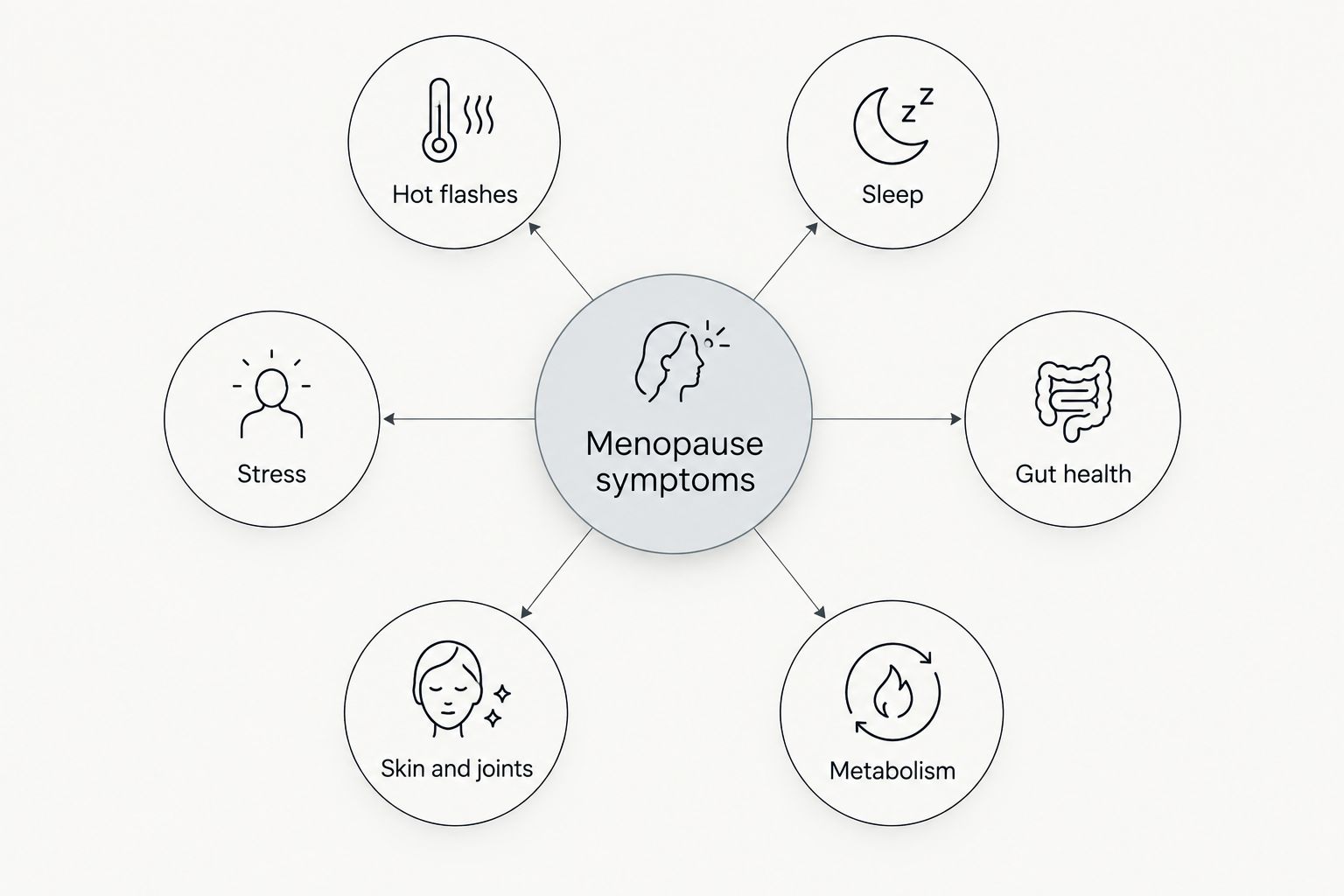
Non-hormonal menopause supplements at a glance
Here's how the six categories compare in 2026:
| Category | Best for | Standout feature | Key limitation |
|---|---|---|---|
| Black cohosh | Hot flashes & night sweats | Most-studied herbal option for vasomotor symptoms | Not recommended with liver conditions or tamoxifen without medical input |
| Magnesium glycinate | Sleep disruption | Gentle on digestion, studied dose 200-400 mg | Doesn't address hot flashes directly |
| Ashwagandha (KSM-66) | Stress & mood swings | Studied at 300-600 mg for stress markers | Works on stress response, not vasomotor symptoms |
| Probiotics | Gut health & bloating | Targets microbiome shifts common in menopause | Strain-specific; results vary by product |
| Collagen peptides | Skin & joint support | Supports skin elasticity and joint comfort | No effect on hot flashes, sleep, or mood |
| Herbal multi-symptom blends | Weight & metabolism support | Combines several ingredients in one dose | Harder to isolate what's actually working |
1. Black cohosh: best non-hormonal menopause supplement for hot flashes and night sweats
Black cohosh (Actaea racemosa) is the most-researched herbal option for vasomotor symptoms, traditionally used to help with hot flashes and night sweats. Most products standardize to a triterpene glycoside content and dose in the 20-40 mg range that shows up across published research, though some formulas run higher.
Black cohosh pros:
- Longest research track record of any herbal menopause ingredient
- Widely available as a standardized extract, so potency is easier to verify
- Doesn't contain phytoestrogens the way soy-based options do
Black cohosh cons:
- Not advised alongside tamoxifen or other hormone-sensitive medications without a doctor's input
- Rare reports of liver-related effects mean anyone with liver disease should check with a physician first
- Doesn't touch sleep, mood, or gut symptoms
Best for: women whose primary complaint is hot flashes or night sweats. Verdict: Buy — if vasomotor symptoms run your day, this is where The Midlife List's black cohosh comparison starts.
2. Magnesium glycinate: best non-hormonal menopause supplement for sleep
Magnesium glycinate is the form most midlife women tolerate best, since it's gentler on the gut than magnesium oxide or citrate. It's commonly dosed at 200-400 mg in the evening, and it's traditionally used to help support relaxation and sleep onset rather than treat a specific menopause symptom directly.

Magnesium glycinate pros:
- Well-tolerated form, less likely to cause loose stools than other magnesium types
- Supports sleep and muscle relaxation, two common menopause complaints
- Inexpensive relative to specialty herbal blends
Magnesium glycinate cons:
- Won't reduce hot flash frequency on its own
- High doses can interact with certain blood pressure or kidney medications
- Effects on sleep build gradually, not overnight
Best for: women whose menopause symptoms show up mostly at night as restlessness or trouble staying asleep. Verdict: Buy — pair it with sleep hygiene basics; see The Midlife List's magnesium and sleep guide for specific comparisons.
3. Ashwagandha (KSM-66): best non-hormonal menopause supplement for stress and mood swings
KSM-66 is the most-studied ashwagandha root extract, typically dosed between 300-600 mg daily. It's traditionally used to help the body manage stress, and research points to lower self-reported stress and anxiety scores at that range.
Ashwagandha pros:
- Backed by more clinical research than most other adaptogens on the market
- May help with the irritability and anxiety that often accompany perimenopause
- Available in capsule or gummy form, which matters if you don't like swallowing pills
Ashwagandha cons:
- Not a hot flash or sleep remedy — it works on stress response, not vasomotor symptoms
- Can lower blood pressure or blood sugar further in people already on medication for either
- Should be paused before surgery and used cautiously with thyroid medication
Best for: women whose top complaint is stress, irritability, or mood swings rather than hot flashes. Verdict: Buy — The Midlife List's ashwagandha gummies comparison breaks down specific formats.
4. Probiotics: best non-hormonal menopause supplement for gut health
Estrogen decline during menopause shifts gut bacteria composition, which is part of why bloating and digestive changes show up for a lot of women in their 40s and 50s. Probiotic blends aimed at this window typically supply somewhere in the 1 to 10 billion CFU range, though strains and counts vary widely by brand.
Probiotics pros:
- Targets a menopause symptom (gut changes) that other categories on this list ignore
- Some formulas add prebiotic fiber, which supports the same goal
- Generally low risk for most healthy adults
Probiotics cons:
- Strain-specific — a product that helped a friend may do nothing for you
- No effect on hot flashes, sleep, or mood
- Needs several weeks of consistent use before you'd notice a difference
Best for: women dealing with new bloating, irregularity, or digestive discomfort alongside other menopause symptoms. Verdict: Buy — check The Midlife List's probiotics for menopause guide for strain-specific comparisons.
5. Collagen peptides: best non-hormonal menopause supplement for skin and joints
Collagen production drops as estrogen falls, and that shows up as thinner skin and stiffer joints for a lot of women. Peptide-form collagen, typically dosed between 2.5 and 15 grams a day depending on the product, is traditionally used to help support skin elasticity and joint comfort.
Collagen pros:
- Addresses a visible, often-ignored menopause change (skin and joints)
- Widely available as an unflavored powder that mixes into coffee or smoothies
- No known major medication interactions for most healthy adults
Collagen cons:
- Doesn't touch hot flashes, sleep, mood, or gut symptoms
- Results take months, not weeks, to notice
- Marine and bovine sources aren't appropriate for every diet or allergy profile
Best for: women mainly concerned with skin thinning or new joint stiffness. Verdict: Hold — worth adding once your top symptom is under control, but not the first purchase if hot flashes or sleep are the bigger problem.
6. Herbal multi-symptom blends: best non-hormonal menopause supplement for weight and metabolism support
These formulas combine several of the ingredients above — often black cohosh, ashwagandha, and a metabolism-support herb like green tea extract — into one product aimed at the weight and energy shifts that show up alongside other menopause symptoms.
Herbal blend pros:
- One product instead of five separate bottles
- A reasonable starting point if you're not sure which symptom to target first
- Often includes ingredients from more than one category on this list
Herbal blend cons:
- Doses of individual ingredients are usually lower than in single-ingredient products
- Harder to tell which ingredient is doing the work if something helps, or doesn't
- More ingredients means more chances for a medication interaction to slip through
Best for: women who want a single product to start with before narrowing down to a specific symptom category. Verdict: Wait — try isolating your top symptom first with a single-ingredient option, then consider a blend once you know what's working.
How we ranked these categories
Each category above is scored against the same six criteria: ingredient form, dose accuracy against published research, symptom specificity, testing transparency, label clarity, and interaction warnings. Categories that target one symptom clearly and dose it correctly rank above blends that spread a lower dose across several ingredients.
Which non-hormonal menopause supplement should you choose?
Start with the symptom that bothers you most, not the product with the longest ingredient list. If hot flashes and night sweats run your day, black cohosh is the category to try first in 2026. If sleep is the problem, magnesium glycinate at 200-400 mg is the more direct fix. If stress and mood swings are wearing you down, ashwagandha (KSM-66) dosed at 300-600 mg addresses that specific response, not hot flashes.
None of these are a substitute for hormone therapy, and none work the same way for every woman. Pick one category, give it a real trial period, and track what actually changes before adding a second product.
Compare menopause supplements by symptom
See every non-hormonal menopause supplement category The Midlife List reviews in 2026.
FAQ
What is the best non-hormonal menopause supplement in 2026?
For most women, black cohosh is the strongest non-hormonal option for hot flashes and night sweats in 2026. If sleep or stress is the bigger problem, magnesium glycinate or ashwagandha (KSM-66) target those symptoms more directly.
Are non-hormonal menopause supplements as effective as hormone therapy?
No single non-hormonal supplement matches the symptom control of hormone therapy for most women. They're best used as a first step or alongside a doctor's guidance, not as a guaranteed replacement.
Is black cohosh safe to take for menopause symptoms?
Black cohosh is generally well tolerated, but it isn't recommended alongside tamoxifen or for anyone with liver disease without medical input. Rare liver-related effects have been reported, so check with a doctor if you have existing liver concerns.
How much magnesium should I take for menopause sleep problems?
Most magnesium glycinate products for sleep are dosed between 200 and 400 mg, taken in the evening. Higher doses don't necessarily improve sleep and can cause digestive upset in some people.
Can ashwagandha help with menopause mood swings?
Ashwagandha, particularly the KSM-66 extract at 300-600 mg, is traditionally used to help the body manage stress and shows lower self-reported stress scores in research. It targets stress response, not hot flashes or sleep directly.
Do probiotics help with menopause bloating?
Probiotics can help some women with the bloating and digestive shifts that come with declining estrogen, though results are strain-specific. Give a probiotic several weeks of consistent use before deciding if it's working.
How long does it take for non-hormonal menopause supplements to work?
Herbal options like black cohosh and ashwagandha usually need a couple of months of consistent use before you can judge effectiveness. Collagen for skin and joints typically needs even longer, while magnesium's sleep effects can show up sooner.
Are non-hormonal menopause supplements FDA approved?
No. Dietary supplements, including every category on this list, aren't approved by the FDA the way prescription hormone therapy is regulated. These statements have not been evaluated by the FDA, and none of these products are intended to diagnose, treat, cure, or prevent any disease.
One last thing
Most "menopause support" labels stack more than one of these categories into a single capsule or gummy — a blend might carry black cohosh and magnesium in the same serving. Read the supplement facts panel before adding a second product on top of a blend you're already taking; doubling up on the same ingredient from two bottles is easy to do by accident and easy to avoid once you know to check.
These statements have not been evaluated by the Food and Drug Administration. These products are not intended to diagnose, treat, cure, or prevent any disease. This page contains affiliate links, and The Midlife List may earn a commission if you buy through one — that commission never decides which category or product appears here or where it ranks.
Keep exploring
One question leads to another.
Explore our answer library for practical guides and source links.
Browse the answer libraryThis is general educational information, not medical advice. Product details can change; review the current label and ask a qualified health professional about personal questions, medications, pregnancy, or health conditions.