
Menopause insomnia rarely has one cause, so the best over the counter sleep aid for menopause depends on which cause is keeping you up. The best overall pick for 2026 is magnesium glycinate, black cohosh wins when hot flashes and night sweats are the actual disruptor, ashwagandha (KSM-66) wins for a racing mind at bedtime, and melatonin is the best budget, occasional-use option. Nightly diphenhydramine or doxylamine antihistamines (the active ingredients in Benadryl and Unisom SleepTabs) round out the list — fine once in a while, not a menopause sleep strategy.
- Magnesium glycinate (200-400 mg at bedtime) is the best overall over the counter sleep aid for menopause in 2026.
- Black cohosh (40 mg/day) targets sleep loss caused by hot flashes and night sweats specifically.
- Ashwagandha KSM-66 (300-600 mg/day) helps a racing mind wind down rather than forcing sedation.
- Melatonin (0.5-5 mg) works fastest but fits occasional use, not a nightly menopause routine.
- Diphenhydramine and doxylamine antihistamines lose effectiveness fast and don't address menopause causes.
Why this matters
This guide contains affiliate links; if you buy through one, The Midlife List may earn a commission, and commission never determines which product is included or where it ranks. That matters here because the ranking below is picked by which ingredient targets which cause, not by which pays best.
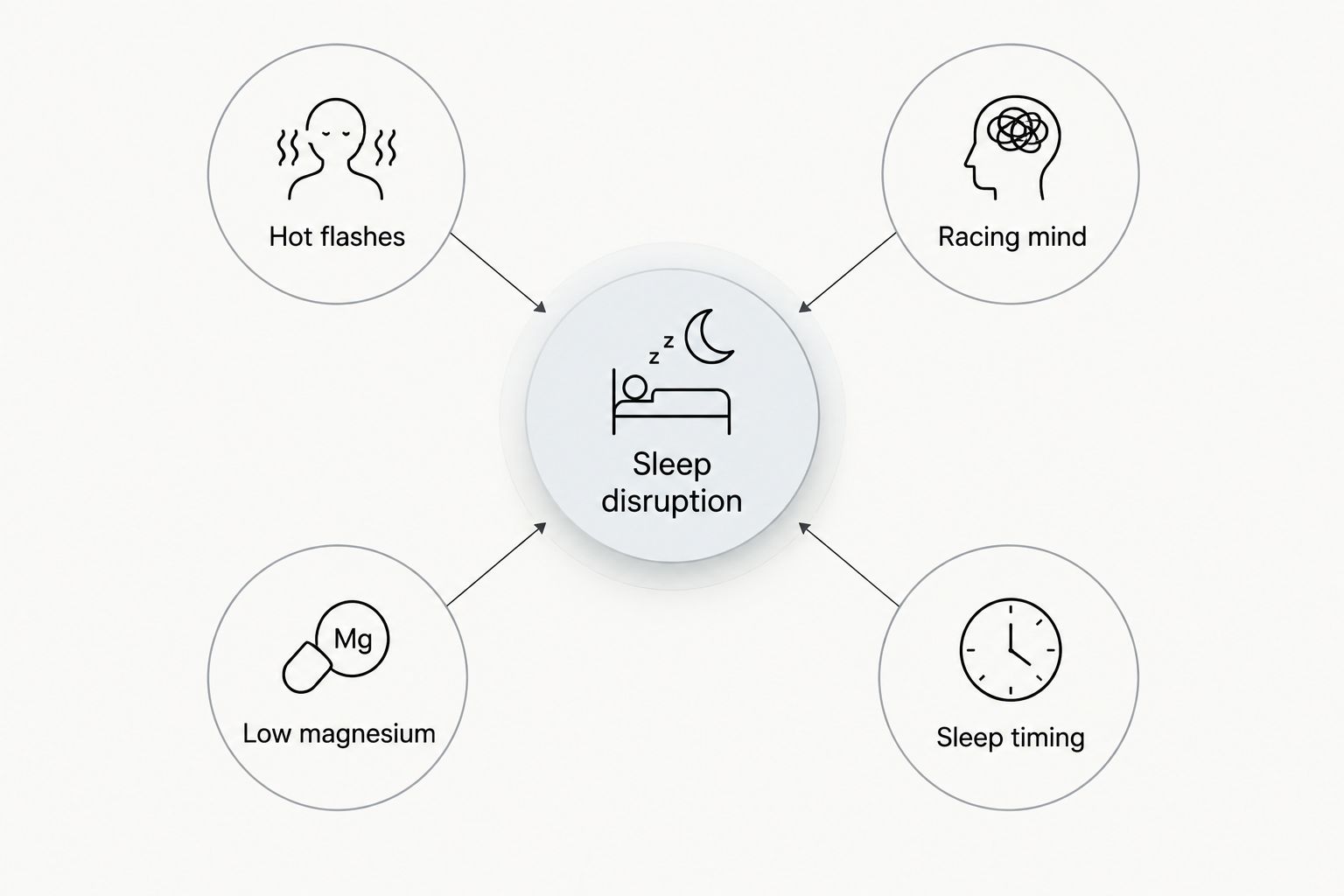
Sleep and menopause fight each other for a few concrete reasons. Falling estrogen changes the brain's temperature-regulation signal, which is why hot flashes and night sweats often hit right as you're drifting off. Declining progesterone, which has a calming effect on the nervous system, can leave you wired at 2 a.m. in a way you weren't at 32. Stack ordinary midlife stress on top and you get a sleep problem with three or four separate causes — which is why one supplement rarely fixes it for everyone in 2026.
The options below split roughly by which cause they target: heat, a wired nervous system, magnesium depletion, or timing. See the full menopause supplement comparison if you want the broader picture beyond sleep specifically.
What makes the best OTC sleep aid for menopause
- Ingredient studied for sleep, stress, or menopause symptoms specifically, not just generic sedation
- Label dose matches published research ranges, not a fraction of them
- Non-habit-forming and safe for repeated, nightly use
- Clear label naming the exact ingredient form (glycinate vs. oxide, KSM-66 vs. plain ashwagandha)
- Reasonable interaction profile with common midlife medications like thyroid or blood pressure drugs
- Targets a root sleep disruptor (heat, stress, mineral depletion) instead of only forcing sedation
These statements have not been evaluated by the Food and Drug Administration. These products are not intended to diagnose, treat, cure, or prevent any disease. Talk to your doctor before starting a new supplement, especially if you take medication or manage an existing health condition.
Best OTC sleep aids for menopause in 2026, at a glance
| Option | Best for | Standout feature | Key limitation |
|---|---|---|---|
| Magnesium glycinate | Nightly sleep support overall | Gentler on digestion than magnesium oxide | Doesn't touch hot flashes directly |
| Black cohosh | Hot flash and night sweat-driven waking | Most-studied herbal option for menopause symptoms | Takes weeks to show an effect |
| Ashwagandha (KSM-66) | A racing mind at bedtime | Studied for stress and cortisol response | Smaller evidence base than magnesium |
| Melatonin | Occasional, fast-acting use | Works within 30-60 minutes | Effect can fade with nightly long-term use |
| Diphenhydramine / doxylamine | Occasional short-term use only | Fast sedation, widely available | Tolerance builds within days |
1. Magnesium glycinate: best overall OTC sleep aid for menopause
Magnesium glycinate pairs magnesium with the amino acid glycine, which is gentler on the stomach than magnesium oxide or citrate and easier to take every night without cramping. It's the ingredient The Midlife List points women to first when a menopause sleep aid needs to work night after night, not just once in a while. The full magnesium supplements for menopause sleep comparison breaks down label-by-label picks.
Typical studied doses run 200 to 400 mg of elemental magnesium at bedtime, and glycine itself has a mild calming effect separate from the magnesium.

Magnesium glycinate pros:
- Gentle on digestion compared with other magnesium forms
- Safe for nightly, ongoing use in most healthy adults
- Doubles as support for muscle cramps and tension common in perimenopause
- Widely available with easy-to-find third-party-tested options
Magnesium glycinate cons:
- Doesn't address hot flashes or night sweats directly
- Can interact with certain antibiotics and thyroid medication — space doses apart
- Effect builds gradually rather than acting as a knockout sedative
Magnesium glycinate verdict: Buy. It's the safest nightly foundation on this list and a reasonable first move before anything else.
2. Black cohosh: best for sleep disrupted by hot flashes and night sweats
Black cohosh is the most-studied herbal option for menopause vasomotor symptoms — the hot flashes and night sweats that jolt women awake several times a night. When the sleep problem is really a temperature problem, black cohosh addresses the trigger instead of sedating around it. The black cohosh supplements for menopause roundup breaks down which standardized extracts are worth a look.
Standardized extract is typically dosed at 40 mg once daily or 20 mg twice daily, the range used in most published trials, and it's traditionally used to help with hot flashes and night sweats rather than sleep onset itself.
Black cohosh pros:
- Targets the actual cause of waking (heat), not just the symptom
- Non-habit-forming with a long history of use in menopause
- Once- or twice-daily dosing is simple to stick with
Black cohosh cons:
- Takes 4 to 12 weeks to show a noticeable effect — not a fix for tonight
- Research results are mixed; not every woman responds
- Not appropriate with liver conditions or certain hormone-sensitive conditions without medical guidance
Black cohosh verdict: Buy if night sweats are your actual sleep disruptor and you can give it a few weeks.
3. Ashwagandha (KSM-66): best for a racing mind at bedtime
Ashwagandha is an adaptogen — traditionally used to help the body manage its stress response rather than sedate directly. KSM-66 is the specific extract used in most of the clinical research behind ashwagandha's stress and sleep-quality claims, so check that the label names KSM-66 rather than a generic ashwagandha root powder.
Studied doses run 300 to 600 mg per day, usually split into a morning and evening dose or taken once in the evening. If a wired, can't-shut-off-my-brain feeling is what's keeping you up — not heat, not pain — this is the pick that targets that specific problem.
Ashwagandha (KSM-66) pros:
- Targets stress and rumination rather than forcing sedation
- Daytime dosing option if evening-only isn't enough
- Long history of traditional use alongside a growing body of clinical research
Ashwagandha (KSM-66) cons:
- Evidence base is smaller than magnesium's or black cohosh's
- Can lower blood pressure and blood sugar — a real consideration on related medication
- Not a fast fix; benefits build over weeks
Ashwagandha (KSM-66) verdict: Buy for stress-driven sleeplessness; pair it with magnesium glycinate rather than replacing it.
4. Melatonin: best for occasional, fast-acting sleep timing
Melatonin doesn't treat menopause symptoms — it resets the body's sleep-timing signal, which makes it most useful for occasional nights, travel, or a schedule that's slipped, not as a nightly menopause strategy in 2026. Low doses of 0.5 to 5 mg taken 30 to 60 minutes before bed work as well as or better than higher doses for most adults, since melatonin doesn't follow a more-is-better dose curve.
Melatonin pros:
- Fast-acting, usually within 30 to 60 minutes
- Inexpensive and available everywhere, including single-dose gummies
- Low doses (0.5-3 mg) work well for occasional use
Melatonin cons:
- Doesn't touch hot flashes, night sweats, or stress-driven waking
- Higher doses (5-10 mg) aren't necessarily more effective and raise next-day grogginess risk
- Effectiveness can fade with nightly long-term use for some women
Melatonin verdict: Buy for occasional use, hold for a nightly routine. It's a good backup, not a foundation.
5. Diphenhydramine and doxylamine antihistamines: best for occasional use only
Diphenhydramine (the active ingredient in Benadryl and many "PM" pain relievers) and doxylamine (the active ingredient in Unisom SleepTabs) are the most common OTC sleep aids on drugstore shelves in 2026, and they work fast because they're sedating antihistamines. They weren't designed for menopause and they weren't designed for nightly use.
Diphenhydramine/doxylamine pros:
- Fast, reliable sedation for an occasional bad night
- Inexpensive and available without a special trip
Diphenhydramine/doxylamine cons:
- Tolerance builds within days of regular use, so effectiveness drops fast
- Anticholinergic side effects (dry mouth, grogginess, constipation) are common with frequent use
- Not a menopause-specific solution — doesn't address hot flashes, stress, or hormonal shifts
Diphenhydramine/doxylamine verdict: Caution — occasional use only. Fine for a rough night before a big day; not a plan for the next several years of menopause sleep.
How we ranked these
Each pick is scored against the criteria above: whether the ingredient is actually studied for sleep or menopause symptoms, whether the label dose matches the research, and whether it's safe for the kind of repeated, nightly use menopause sleep problems actually require. Diphenhydramine and doxylamine rank last on purpose — they pass the "does it work tonight" test but fail the "can you use this for years" test, which matters more for a chronic problem like menopause insomnia.
Compare more menopause supplements
See the full lineup ranked by symptom and ingredient.
Which OTC sleep aid should you choose for menopause in 2026?
If you only try one thing, start with magnesium glycinate at 200 to 400 mg before bed — it's safe for nightly use and helps most women regardless of which specific symptom is disrupting sleep. Add black cohosh if hot flashes and night sweats are the actual trigger, or ashwagandha (KSM-66) if your brain won't stop running through tomorrow's to-do list. Keep melatonin in the cabinet for occasional nights and skip nightly diphenhydramine or doxylamine altogether — they're a stopgap, not a strategy.
FAQ
What is the best over-the-counter sleep aid for menopause in 2026?
Magnesium glycinate (200-400 mg at bedtime) is the best overall over-the-counter sleep aid for menopause in 2026 because it's safe for nightly use no matter which symptom is disrupting sleep. Black cohosh works better specifically for hot flash-driven waking, and ashwagandha (KSM-66) works better for stress-driven wakefulness.
Does magnesium help with menopause insomnia?
Magnesium glycinate may help menopause-related insomnia by supporting relaxation and easing muscle tension at doses of 200 to 400 mg before bed. It doesn't directly treat hot flashes or hormonal shifts, so pair it with a targeted option if those are your main disruptor.
Can black cohosh help you sleep better during menopause?
Black cohosh is traditionally used to help with hot flashes and night sweats, which indirectly improves sleep for women whose main disruptor is heat-related waking. It takes 4 to 12 weeks to show an effect and isn't a fast-acting sedative.
Is melatonin safe to take every night during menopause?
Melatonin at low doses (0.5-5 mg) is generally considered fine for short stretches, but it's built for occasional sleep-timing problems rather than nightly menopause insomnia. Some women find its effect fades with regular long-term use.
Is ashwagandha good for menopause-related sleep problems?
Ashwagandha, specifically the KSM-66 extract studied at 300-600 mg per day, is traditionally used to help the body manage stress, which can ease a racing mind at bedtime. It works better for stress-driven wakefulness than for hot flashes or hormonal sleep disruption.
Are Benadryl or Unisom safe for menopause insomnia?
Diphenhydramine (Benadryl) and doxylamine (Unisom SleepTabs) work for an occasional rough night but aren't meant for regular use, since tolerance builds within days and anticholinergic side effects increase with frequent use. They also don't address any menopause-specific cause of sleep disruption.
How long does an OTC sleep aid take to work for menopause symptoms?
Melatonin and antihistamine sleep aids work within 30 to 60 minutes, while black cohosh and ashwagandha take 4 to 12 weeks of consistent use to show a noticeable effect. Magnesium glycinate often falls in between, with some women noticing a difference within one to two weeks.
Should you talk to a doctor before trying an OTC sleep aid for menopause?
Yes, especially if you take thyroid medication, blood pressure medication, antidepressants, or manage a hormone-sensitive condition, since several of these ingredients interact with common midlife prescriptions. A doctor can also rule out other causes of sleep disruption before you try a supplement.
One last thing
The women who get the most out of an OTC sleep aid for menopause usually aren't taking one thing — they're pairing a nightly foundation like magnesium glycinate with one targeted option for their specific disruptor, black cohosh for heat or ashwagandha for stress. A single ingredient rarely solves a problem with three or four different root causes stacked on top of each other.
Related guides
Keep exploring
One question leads to another.
Explore our answer library for practical guides and source links.
Browse the answer libraryThis is general educational information, not medical advice. Product details can change; review the current label and ask a qualified health professional about personal questions, medications, pregnancy, or health conditions.